
Born in Essex
Charles Haddon Spurgeon was born June 19 in Kelvedon, England.
1834–1892 • PASTOR • PREACHER • AUTHOR • PHILANTHROPIST
Charles Haddon Spurgeon was a nineteenth-century English Baptist pastor whose preaching, publishing, pastor-training, charitable work, and defense of evangelical doctrine made him one of the best-known Christian ministers of the Victorian era. He became popularly known as the “Prince of Preachers,” but his life was much larger than a famous pulpit.
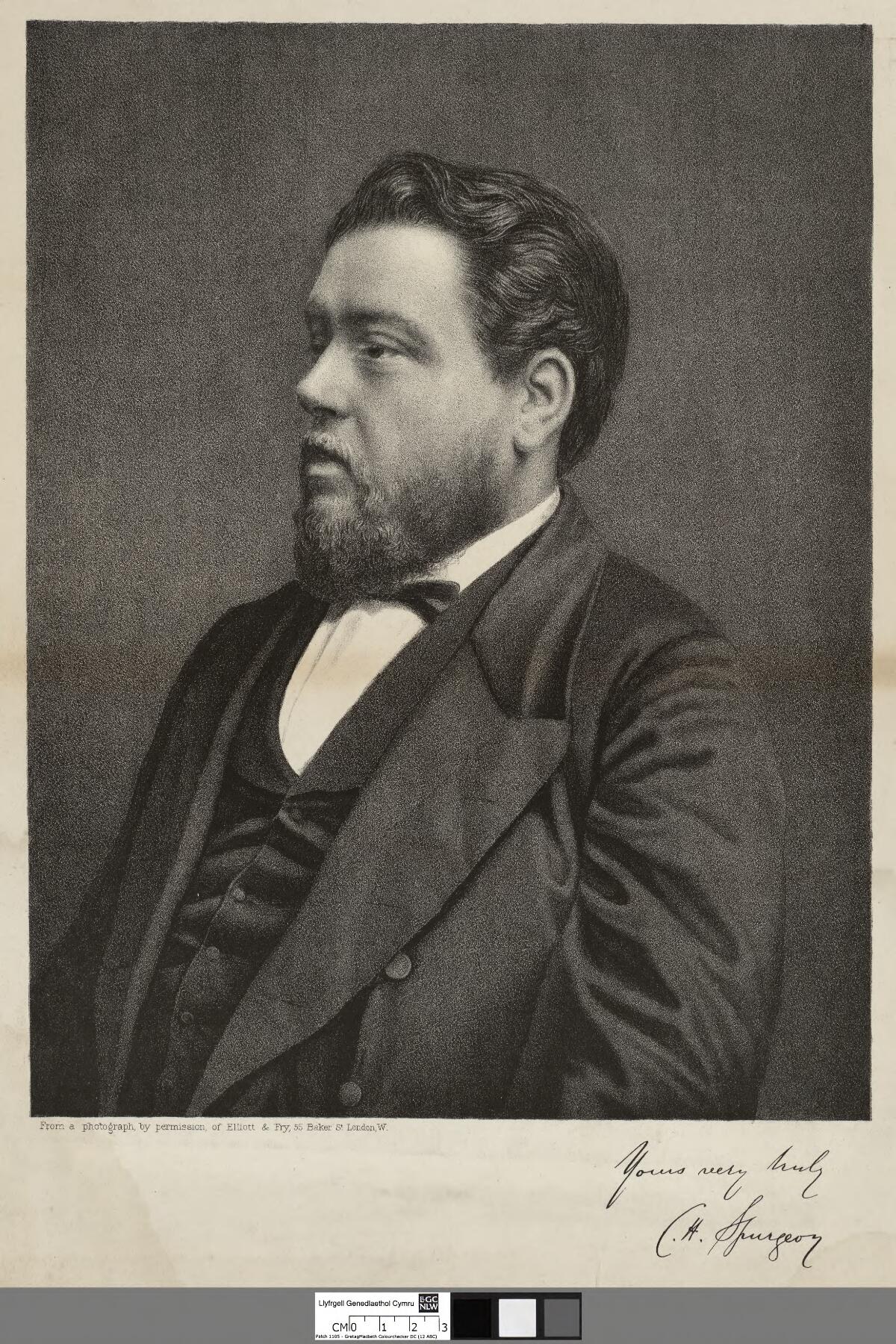
Spurgeon was born in Kelvedon, Essex, into a family with generations of Protestant ministry behind it. His father, John Spurgeon, and his grandfather, James Spurgeon, were ministers. Charles spent important childhood years in his grandfather’s home, where Puritan books and serious Bible reading became part of his intellectual world. He was a voracious reader long before he became a preacher.
At fifteen, Spurgeon was deeply troubled about his standing before God. On January 6, 1850, snow disrupted his trip to church and he entered a small Primitive Methodist chapel in Colchester. A lay preacher spoke from Isaiah 45:22—“Look unto me, and be ye saved.” Spurgeon later described that simple appeal to look to Christ as the turning point of his conversion.
He began preaching while still in his teens and became pastor at Waterbeach before he was twenty. His direct style, vivid illustrations, enormous memory, strong voice, and urgent evangelistic appeals quickly drew attention. In 1854, at nineteen, he accepted the pastorate of New Park Street Chapel in Southwark, London.
Charles Haddon Spurgeon was born June 19 in Kelvedon, England.
At fifteen, he heard the Isaiah 45:22 message in Colchester and professed faith in Christ.
The teenager began preaching and soon served the Baptist chapel at Waterbeach.
At nineteen, he moved to London and began the pastorate that would last until his death.
He married Susannah Thompson on January 8. That year a false alarm at Surrey Gardens Music Hall caused a deadly panic and left him deeply shaken.
His ministerial training work developed into the Pastors’ College, created to equip men for gospel ministry.
He preached to a crowd estimated at more than 20,000, demonstrating the extraordinary reach of his public ministry.
The new London meeting house opened, seating thousands and becoming the center of his ministry.
Spurgeon began the monthly magazine that carried sermons, reviews, ministry reports, and theological argument.
He founded an orphanage that grew into a substantial charitable work for children.
He withdrew from the Baptist Union amid a dispute over biblical authority and core evangelical doctrine.
After years of recurring illness, he died in Menton, France. His death brought enormous public mourning in Britain.
Spurgeon’s London congregation rapidly outgrew New Park Street Chapel. Services moved to larger halls, including the Surrey Gardens Music Hall, before the Metropolitan Tabernacle opened in 1861. Contemporary crowds were remarkable, but Spurgeon did not think of himself merely as a platform speaker. He was pastor of a large local church, worked with elders and deacons, baptized believers, counseled people, led prayer meetings, and maintained a large network of ministry institutions.
The 1856 Surrey Gardens tragedy was one of the darkest episodes of his early ministry. During a packed service, someone shouted an alarm; panic followed and people were killed and injured. The event contributed to periods of severe mental anguish. Spurgeon continued preaching, but his writings show that discouragement and depression were not abstractions to him.
Charles married Susannah Thompson on January 8, 1856. Their twin sons, Charles and Thomas, were born later that year. Susannah became an important partner in the ministry, especially through her Book Fund, which supplied theological books to ministers who could not afford them. Both sons later entered Christian ministry. Charles and Susannah also lived with significant illness, and their correspondence reveals a marriage shaped by affection, sacrifice, and the pressures of public ministry.
Spurgeon’s influence depended on printing as much as the pulpit. His sermons were taken down, edited, and sold weekly, then collected into the New Park Street Pulpit and Metropolitan Tabernacle Pulpit. The complete series runs to 63 volumes. Sermons circulated internationally and were translated into many languages. His books ranged from evangelistic works and devotionals to ministerial lectures, theology, practical writing, and the massive Psalm commentary The Treasury of David.
Spurgeon believed Christian faith should produce action. The Pastors’ College trained ministers. The Stockwell Orphanage cared for children. His wider ministry supported literature distribution, almshouses, mission work, and other forms of relief. Susannah’s Book Fund became another major part of the family’s practical ministry. His public preaching also addressed social evil; he was an outspoken opponent of slavery and his anti-slavery statements created hostility toward him in portions of the United States.
Spurgeon was a Baptist and a convinced evangelical with strongly Reformed or Calvinistic theology. He emphasized the authority of Scripture, the sinfulness of humanity, salvation by grace through faith in Jesus Christ, Christ’s substitutionary death, the necessity of conversion, believer’s baptism, the work of the Holy Spirit, prayer, evangelism, and the final hope of resurrection and eternal life. He could preach doctrinally, but his sermons usually drove toward a practical question: what should a hearer believe, do, trust, confess, or change?
In the late 1880s, Spurgeon became increasingly alarmed by what he regarded as theological decline among British Protestants, including doubts about biblical authority and historic Christian doctrines. The conflict became known as the Down-Grade Controversy. In 1887 he resigned from the Baptist Union after its leadership declined to adopt the kind of explicit evangelical doctrinal standard he believed was necessary. The controversy cost him friendships and added to the strain of his final years. Historians continue to debate parts of the dispute, but there is little doubt that Spurgeon understood his stand as a defense of foundational Christian doctrine.
Spurgeon suffered recurrent gout, physical pain, periods of incapacity, and episodes of depression. He often traveled to Menton in southern France for rest and a warmer climate. His final trip began in 1891. He died there on January 31, 1892, at fifty-seven. His body was returned to England, where large crowds mourned him, and he was buried at West Norwood Cemetery in London.
Spurgeon remains widely read because he combined theological conviction with unusually concrete language. He could move from an old biblical text to everyday images—fields, shops, weather, homes, soldiers, ships, illness, debt, meals—and then back to Christ. Modern readers will sometimes encounter Victorian assumptions, dated language, or arguments shaped by nineteenth-century controversies. The value of a historical library is not to pretend he lived today; it is to make his actual words available in context.
Short daily readings and an easy introduction to Spurgeon’s pastoral voice.
SERMONStart at the beginning of the numbered pulpit collection.
BOOKHis clear evangelistic explanation of salvation by grace.
COMMENTARYHis expansive exposition of all 150 Psalms.
MINISTRYSpurgeon speaking directly to preachers and pastors.
LIFERead the story from his diaries, letters, recollections, and family records.
This overview was checked against the Spurgeon Library’s biographical timeline, Spurgeon’s Autobiography, its scholarship on the Down-Grade Controversy, Susannah Spurgeon, Spurgeon’s opposition to slavery, and records of his final days.
Spurgeon Library biography · Spurgeon Autobiography · Down-Grade history · Susannah Spurgeon · Spurgeon and slavery